Seaweed Biostimulants For Turkish Agriculture: What The Science Says
.png)
Turkish growers need drought solutions. Here's what we're seeing from the Arctic.
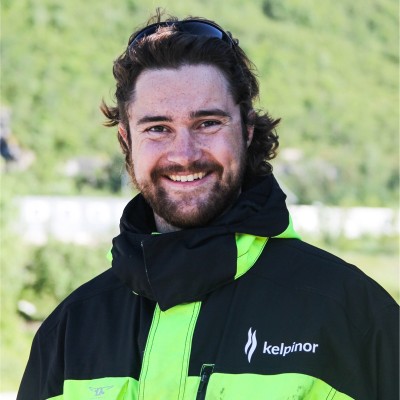
Written by CEO & Co-Founder Hermann Schips, 17th April 2026
Turkey's agricultural sector is under serious climate pressure. I want to explain why seaweed biostimulants are increasingly part of the answer - and what we've observed at Kelpinor since entering this market. The reason behind, is that Kelpinor recently completed a significant commercial shipment to one of Turkey's leading agricultural companies. This marks the beginning of what we intend to be a long-term relationship with the Turkish market - supported by agronomy documentation, local trial programmes, and logistics infrastructure for large-volume supply. We are used to 40 foot containers, and fill in all from 1L, 5L, 10L .. to of course 1000L. Transport routes from the International Port of Bodø by train, ship and truck freight.
The Heavy Drought Problem
In 2025, drought conditions reached critical thresholds across central Anatolia, Thrace, and southeastern Turkey. Reservoirs in Izmir and Bursa were depleted. Olive oil output is projected to drop sharply. Plant-based production forecasts were revised downward. For Turkish growers, who manage some of the most diverse and demanding agricultural systems in the world, this is not a one-season problem.
I've been watching the demand signal from Turkey build steadily over the past 12 months. Our website traffic, inbound enquiries, and ad engagement from Turkish distributors and agricultural companies have grown faster than almost any other market we serve. I think there's a real reason for that, and it goes beyond geography or timing.
"Turkish growers aren't looking for marketing claims. They're looking for documented solutions to real agronomic problems. That's exactly the conversation we want to have."
Why Seaweed - And Why Now in Turkey
Seaweed biostimulants are not a new category. Ascophyllum nodosum extracts have been used in European agriculture for decades. My relatives have harvested and mixed it with fertilizers for hundres of years - and for decades commercially. What has changed lately is the quality of the evidence and the scale of the climate pressure driving adoption.
The bioactive compounds in seaweed - primarily polysaccharides, phytohormones, and betaines - work through specific, measurable mechanisms: enhanced root development, triggered stress-response pathways in the plant, and improved microbial activity in the soil. These are not broad claims. They are effects we document in field trials and replicate across crop types. Ask my Head of R&D paige.heavyside@kepinor.no if you want that data sent to you by the end of the season.
For a country where drought is described by its own agricultural authorities as a structural risk - not an exception - these mechanisms matter. A plant that has developed a stronger root system and can activate its own drought-tolerance pathways is a more resilient plant, regardless of the season.
Our Two Seaweed Species, And Why The Distinction Matters
kelpAGRI-Alaria
Alaria esculenta
Cultivated in dedicated farms in Northern Norway - not wild-harvested. Consistent bioactive profiles, traceable origin, and stable supply for every season. Exceptional for plant stress recovery (after drought).
kelpAGRI-Asco
Ascophyllum nodosum
Wild-harvested from Norwegian Arctic waters. CE certified under EU Regulation 2019/1009. Proven, market-ready with established field trial track record. Great for plant stress prevention (before drought).
What’s in the Kelp? A Closer Look at Our Alaria esculenta Biostimulant
What We Document - And Why Documentation Is The Differentiator
The biostimulant market has a credibility problem. Many products make broad claims that are difficult to verify or reproduce. Some say that this is only the case for Asian biostimulants, and I highly dissagree. This goes for most EU manufacturers as well up until the regulations have finally become stricter. Therefore, we built Kelpinor to work differently: every efficacy claim we make is backed by trial data, and we share that data with the distributors and agronomists we work with.
Our documentation methodology includes:
- field trials across multiple crop types with documented methodology and results
- root density imaging showing measurable changes in root architecture
- controlled drought and heat stress studies with recorded plant health outcomes
- soil microbiome analysis before and after application
- and side-by-side yield comparison trials measured at harvest
This work is informed by ongoing research partnerships with SINTEF, the Arctic University of Norway (UiT), Nord University in Bodø, and NTNU. Independent scientific validation is built into how we operate - it's not an afterthought added for marketing purposes. It is part of the Kelpinor DNA.
What Turkish Distributors And Formulators Are Telling Us
The conversations we're having with Turkish partners share a few common themes. First, they are asking about regulatory clarity. CE certification matters here because it removes ambiguity for any Turkish company also selling into EU markets. Second, they want documentation. Not a brochure, not a claim sheet - trial data and methodology. Third, they want supply security at volume. Small samples and pilot shipments are fine to start, but the underlying question is always whether we can deliver consistently at scale.
For Kelpinor - the answer to all three is yes. CE certified products, full access to trial documentation, and the logistics capability to ship in container volumes to Turkey - these are table-stakes for serious market entry, and we've built for them over the past years.
For Distributors and Fertilizer Formulators
If you're a distributor looking for a CE-certified seaweed biostimulant that you can stand behind with documentation - we're the conversation you've been looking for. If you're a formulator interested in cultivated Alaria as a stable, traceable ingredient for blended products - we have that capability. If you're an agricultural company with specific crops and stress challenges and you want to run a structured trial programme - that's exactly the kind of engagement we prioritize. All MADE IN NORWAY.
Turkey is not a market we're approaching speculatively. We've already shipped. We're already in conversations. And we're committed to building the support infrastructure - agronomy, documentation, logistics - that serious distribution partnerships require.
Phone / WhatsApp: +47 468 22 092
Mail: hermann.schips@kelpinor.no
First movers secure positioning.
The market does not wait - and we never compromise on quality.
Written by CEO & Co-Founder Hermann Schips, 17th April 2026
Recent news
.png)
What’s in the Kelp? A Closer Look at Our Alaria esculenta Biostimulant
.png)